Getting Lost in the Process
Every round is a lesson, if you choose to let it be one. One habit I developed over the years of tracking my stats is mentally debriefing each round. Sometimes it is as simple as remembering each shot while I am inputting post round data. Other times, tournament rounds would get a journal entry or a voice note. The past few seasons, I’ve done a full post-mortem tracking my goals.
This past week, I got the opportunity to play a course I likely won’t ever play again. While on vacation in California wine country, I was able to sneak out to a new course called Brambles. It opened at the end of 2023 and is the first and only course designed by Coore and Crenshaw in California.
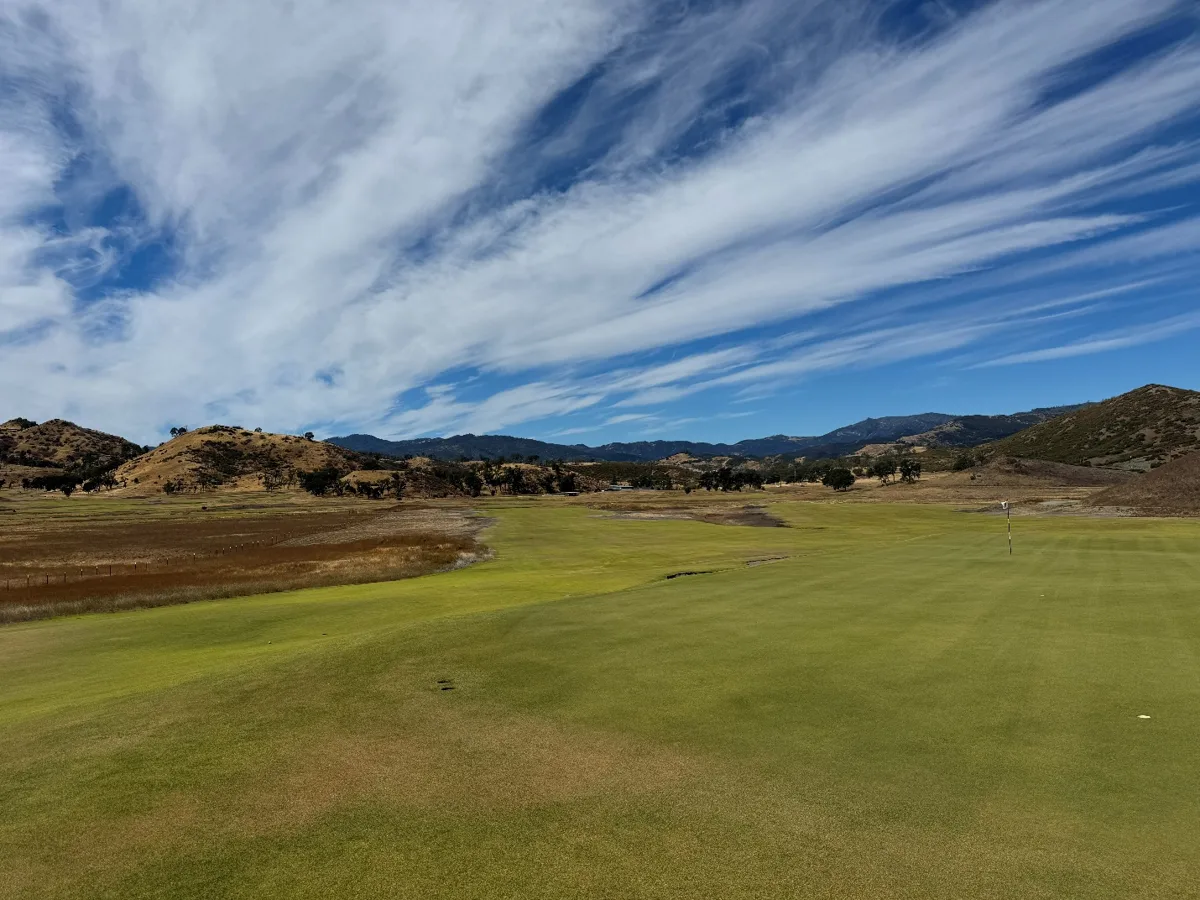
It’s designed to be minimalist, I believe the quote C&C used to describe it is “we want it to play better than it looks.” I can’t think of a better way to describe it as it played incredible despite looking quite rough around the edges.
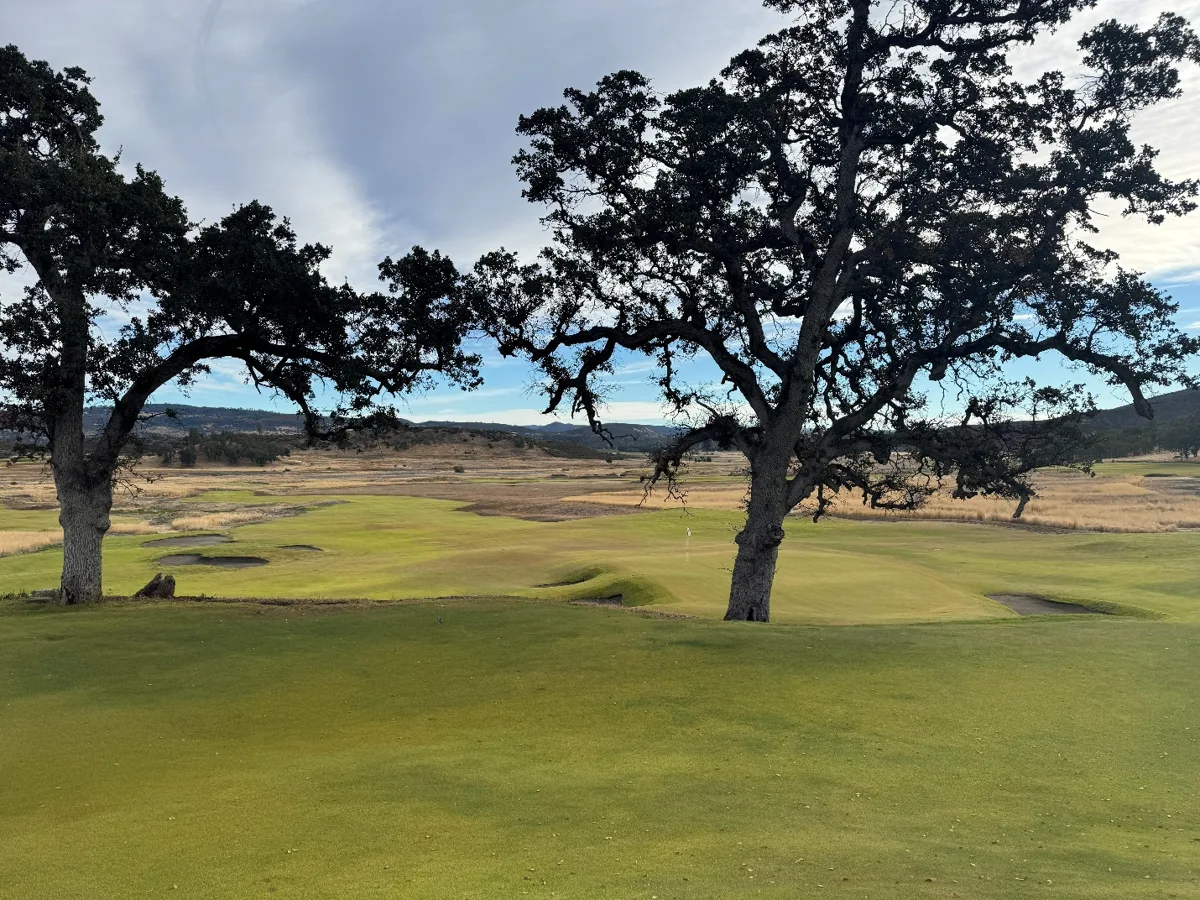
I can spend another 1,000 words talking through the experience itself but that is not the mission of this website nor the goal of this post.
What struck me post round – and even mid round when I caught myself thinking ahead – was how focusing on the process of each shot allowed me to play my best. Without burying the lead, on a brand new course and one I will likely never see again, this round was arguably the best round of my career from a strokes gained perspective (+5.72 overall).
I arrived as the first player off on a Friday morning, playing solo but assigned a caddy to shepherd me around. Typically, I research extensively on Google Maps before playing a new course, but this was slightly different. First off, course maps and score cards were hard to find, and the satellite imagery left the routing a mystery. Secondly, the unique part of Brambles is there are no official par designations. Sure, there are clear one-shot holes that stand out but everything else blends together between long par 3, short par 4, long par 4, short par 5.
Since the round was a bonus round, non-competitive, and ultimately a “bucket-list” course (one that was not on my bucket-list albeit), expectations were low and the main goal was to enjoy the experience. That led me to leaning on my caddy for target selection and course knowledge.
This is where the key learning came from. I was so enveloped in the process, the golf played itself. Each hole was eerily similar:
- What’s my target off the tee?
- What side of the fairway carries the most risk (OB or water)?
- What are the carry numbers to bunkers/creek beds/etc?
- What is the wind doing?
- Where is the pin on the green and what are the distances to the front, back plus where are the run offs or places I do not want to miss?
- How many inches am I aiming from the hole?
- Is this putt breaking more or less than I see?
- Is the putt uphill or downhill?
I’ll spare you the shot by shot details though I can say walking up the 15th hole was the first time my mind wandered to how well I was playing. Not having par on the scorecard to prevent me from mentally doing a check of how many under I was certainly helped. I felt a little nervy over a gimme birdie putt and on the 16th green, my lag putt came up about 4’ short and left my heart racing a bit. My process went from away from solely focusing on targets and hitting those said targets to don’t miss this putt! Needless to say, I hit a couple poor putts on 17 and 18 attempting to steer the ball in the hole.
When I got back into the clubhouse, I was finally able to add up my scores. Even with a 3-putt on the last, I walked away shooting 66.
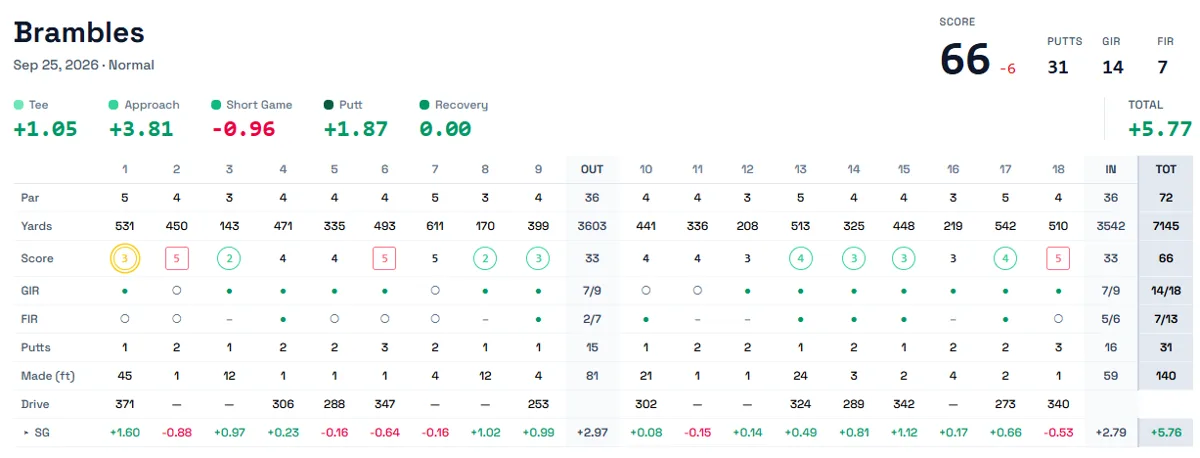 Click the scorecard for the full hole-by-hole breakdown.
The key lesson for me which validated some other rounds this season as well, is to get lost in the process for each shot. This is much easier said than done. Being able to solely focus on what I am trying to do on each shot and not wonder what the result means for the rest of the round is critical. Whenever my next round comes about, I am going into it with the feeling from this round: Talk to my internal caddy about each shot. Find my specific target. Try to hit the ball there each time. Carry this down to putting.
If you can do this for each shot, you can let the athlete inside of you take over and react to what the brain is telling it. I know I’ll keep coming back to this round mentally to reset myself and expectations when I start going sideways.