My Golfing Journey
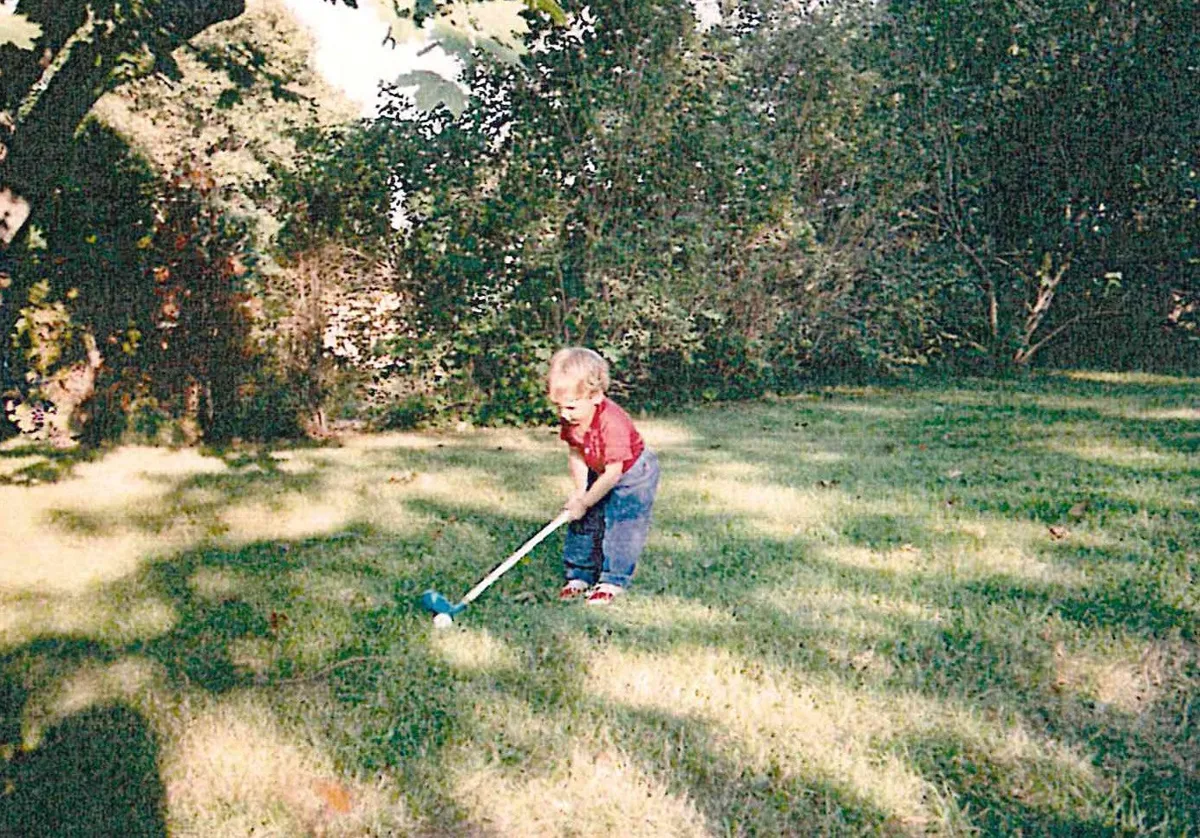
My first real memory of golf is my dad handing me a cut down Callaway 5 wood and a couple of his old irons. We'd just moved into a house with enough yard to smack balls into the woods behind it. I'd tag along with him to the local driving range on those endless summer nights, trying to hit the yardage signs, or if I got lucky, the range cart. Those nights turned into emergency nines at Norwich Golf Club, chasing daylight before calling mom on the way home about dinner. Once I turned 12 I got added to the membership, and a Saturday morning tee time started showing up on my calendar every summer.
I liked it, but it was never the focus. Basketball and soccer ate up my fall and winter, plus a brief soiree into lacrosse. I made the high school golf team as a freshman and slowly moved up the ranks, though I was never our number one or two. I had no idea how college recruiting worked at the time, so golf, and sports in general, took a back seat in where I ended up going to school. The summer before college, with nothing else on the calendar, I won the season long match play tournament at Norwich and the junior club championship. My handicap went from the mid-teens to mid-single digits, and I still remember the cycle it dropped from 15 to 12. I couldn't tell you exactly why I was getting better. My best guess is just playing more, thanks to having my own car and a summer job ten minutes from the course.
Golf went back to the backburner through college, even though I identified with the game more than I had before. My dad switched courses around then too, from Norwich to Black Hall, and in the summers, I got to play morning money matches against some of the best players in Connecticut. In hindsight, I wish I'd paid attention to how they played instead of how they practiced. I was in awe of the scores they shot and the shots they hit, and it appeared the answer was grinding on the range after every round. What I didn't see was that none of what made them good had much to do with flushing every shot. It was everything they did during the round that I wasn't watching.
Post college, I moved to San Diego for business school. Out west I played a lot more golf, and as a resident I got a discount rate at Torrey Pines. Every other weekend for a year I'd be in the walk on queue at 5am to get on the list. In a way, it worked. I hit scratch for the first time in my life, and to this day I still think about one round where I played 17 and 18 three over par just to shoot even at Torrey Pines South. I had the number. I didn't yet have a theory for why.
The theory showed up 3,000 miles away. And it started with a bad tee shot.
I moved back home in the spring of 2014 and settled into a job and a routine in Boston. There was a lot more time for golf with no more group projects and homework. Evening nines after work at Fresh Pond, morning eighteens at Stow Acres, and plenty of nights at the driving range. By the following year I decided to try a real tournament, not a club event, a state run, full strokes, ball in hole event. My first one was the Boston Open at Franklin Park. The first hole at William J. Devine is about as honest as a golf hole gets: 386 yards, a slight tilt right, and the entire golf course sitting to the left of it. I had fully bought into the common approach of playing the hole backwards and hitting to my favorite number, which for me was usually a pitching wedge. That meant laying back to 130 or so. So, the math said hit a shot approximately 250 yards. I pulled the headcover off my 3 wood and the result was a pop-up, chunked shank onto Franklin Park Rd. A re-tee and four more strokes later, I wrote down a 6 for an opening double bogey.
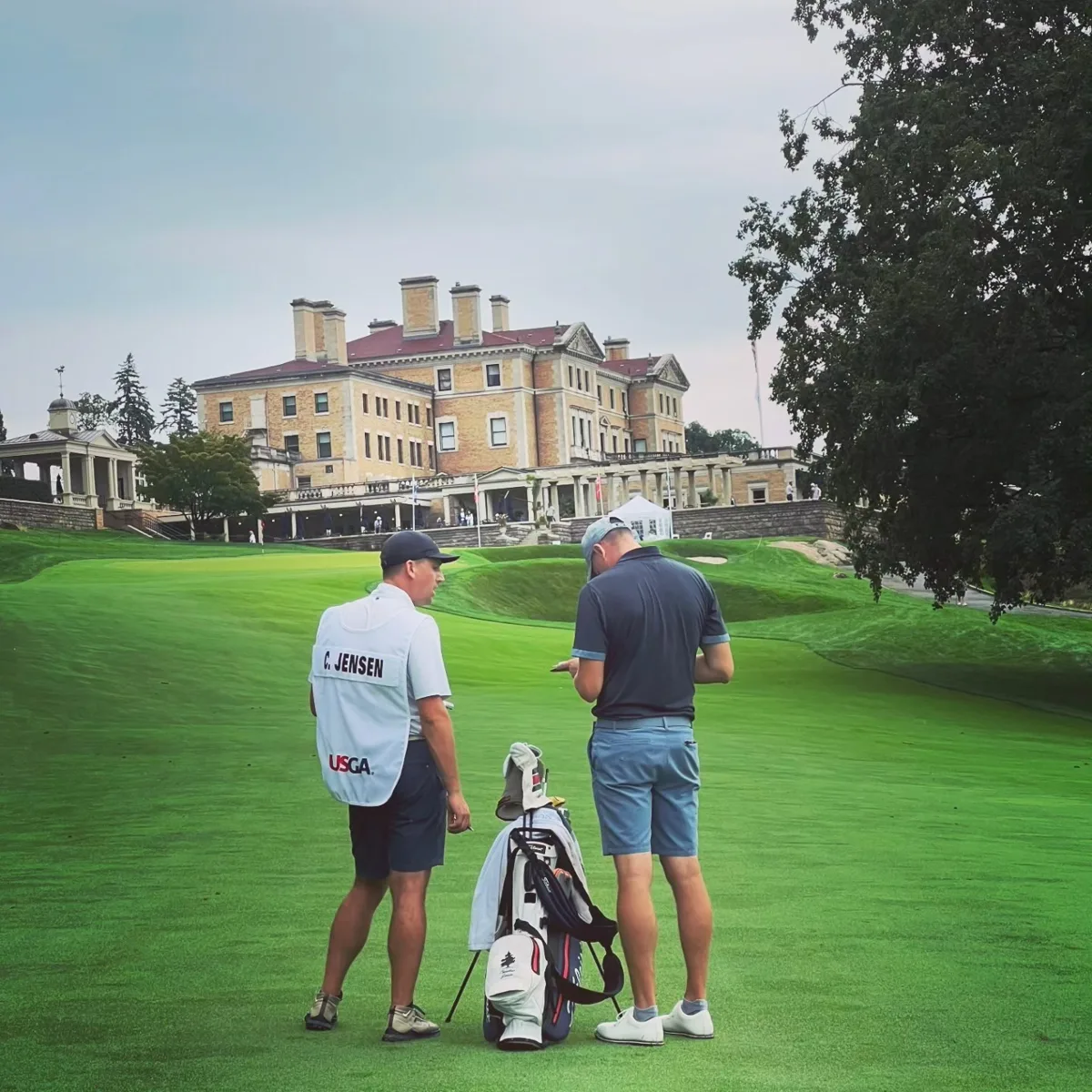
I don't remember much else about that round. Whatever I shot, it was clearly a mix of great and awful, because after the round one of my playing partners bought me a beer and asked, point blank, what I thought I was doing hitting 3 wood on the first hole. I tried to defend the 130 yard number but he wasn't having it. We exchanged numbers that day and Dan is now one of my closest friends. He's caddied for me both times I've made the U.S. Mid-Amateur and I play in his member guest every year. A few days later he sent me a PDF from a guy who consults for PGA Tour players named Richie Hunt. The Pro Golf Synopsis isn't in publication anymore, but it changed how I see this game completely.
Strokes gained was just becoming mainstream then, thanks to Mark Broadie's work defining the actual value of every shot. The idea, the way I explain it to people now, is simple: get the ball as close to the hole as you can on every shot. There's nuance underneath that, but laying back to a comfortable number simply doesn't hold up as a strategy. Dan could see I had the game to actually execute this. I'm sure on more than one hole that first round I hit a drive 30 or 40 yards past him splitting the fairway. I started asking myself the same question he'd asked me: why was I hitting a lesser club on a hole when I didn’t need to?
By 2016 I'd absorbed everything in the Pro Golf Synopsis, and Dan sent me a strokes gained spreadsheet he'd built to track it all. That spreadsheet is the entire reason this website exists. Years of tracking every shot, adding new metrics, chasing the same question, it all started there. The next few seasons were the building years: qualifying rounds at Ponkapoag and an opening 71 at Waubeeka in the Massachusetts Public Links resulting in a T-12 finish, a couple more Pub Links appearances that made the cut without threatening anything, a round of 64 at Newton Commonwealth that's still one of my best ever. The one real turning point in that stretch was switching to a mallet putter in the fall of 2018, after losing over 10 strokes putting at the Ranch during the Pub Links Championship. I gained 1.67 strokes putting with the new putter in my first round with it, and almost 3 the round after that.
The spring of 2019 I joined my first course in Massachusetts, Wedgewood, out in Stow. It was pure bliss before the Covid golf boom, regular Friday rounds and a weekend morning game against a group of genuinely good players who pushed each other constantly. That's where I met Mike, my current Four-Ball partner (our best better ball round there was 61). That same stretch I went all in on Decade, Scott Fawcett's course management system. It made decision making on the course a pre-determined choice, rather than an emotional one. By the end of 2020 I was averaging over 12 greens a round, and it was obvious that GIR percentage tracked almost directly with strokes gained off the tee. By the end of 2022 everything was firing at once, the strokes gained math made sense, Decade was working, and I was posting low score after low score. I remember a weekend at Wedgewood where I bogeyed 18 to shoot 67 on Saturday, then came back Sunday and eagled 18 to shoot 65. My handicap index took a real hit the following year, and for good reason.
That fall my son Davis was born, and just before, I tweaked my left wrist. I spent that winter at the hand doctor's more than the simulator. It was a fair trade with extra time with Davis and my wife at home, but it was still the first time golf had to actually compete for space instead of just filling whatever was left over. By March the wrist was better after an MRI came back clean structurally aside from some early arthritis and it is something I've had to manage ever since.
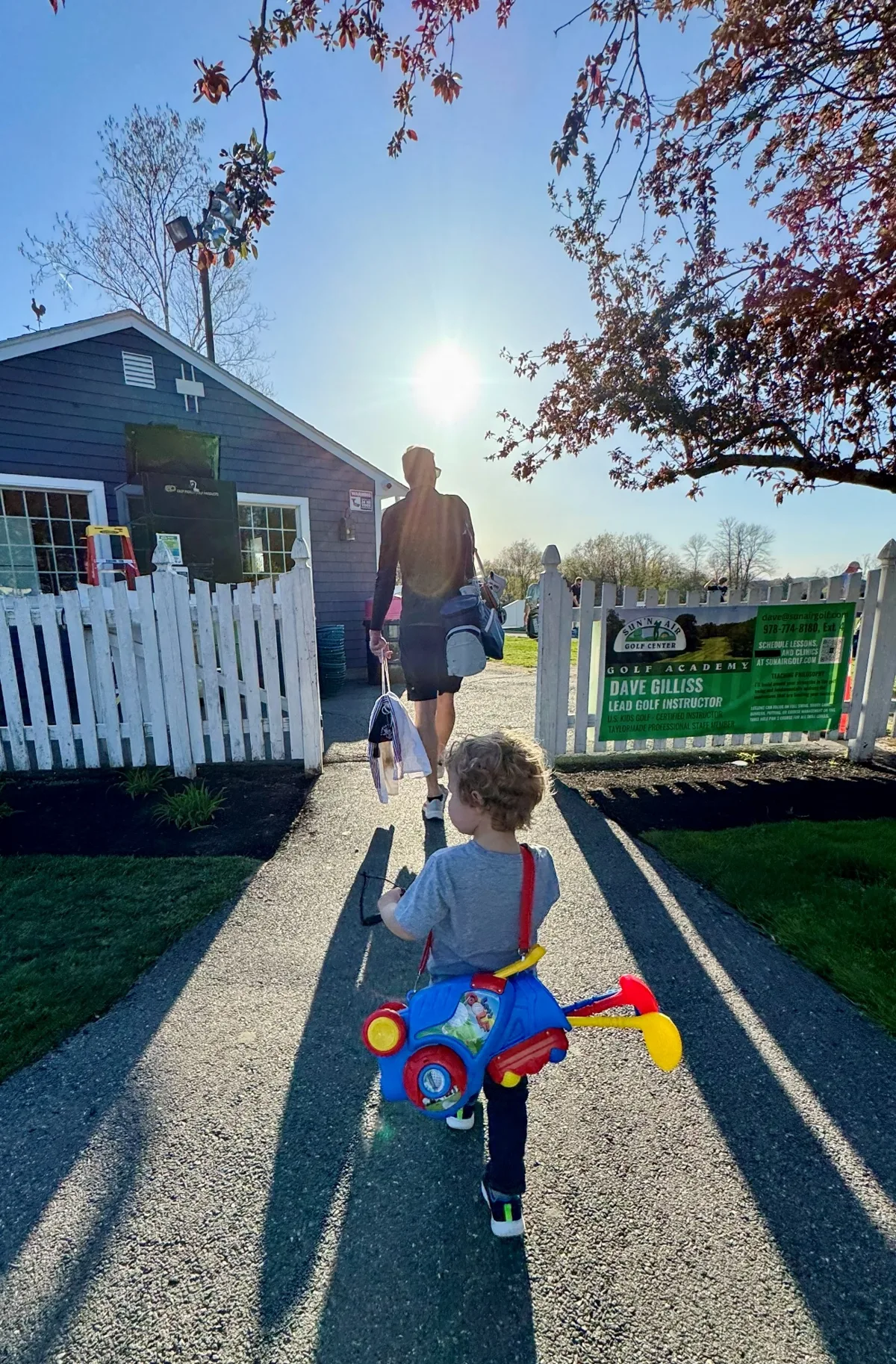
2023 started slow given the lack of practice, though Mike and I played well at the Mass Four-Ball on the Cape. That summer I ramped the tournament schedule back up: U.S. Open local qualifying in May, Mass Amateur qualifying in June, U.S. Amateur qualifying in July. The U.S. Am qualifier at Nashawtuc was ultimately the turning point despite an uncompetitive 80 and 75. Every wedge shot I hit that day left outside of 20’. Meanwhile one of my playing competitors seemingly put every wedge inside 20 feet. I decided right there to work almost exclusively on wedge distance control. For the next month I'd drop Davis at school and head straight to the range next door, taking advantage of a weekday buy-one-get-one before 9am and hit nothing but shots under 120 yards, engraining the feel of every club and distance.
That work showed up almost immediately at the U.S. Mid Am Qualifier at George Wright. I had no real expectations beyond finishing in the top third of the field. I hit multiple wedges inside of 5’ and plenty others inside of 20’. When I two putted my 18th hole, I signed for a 1 under 69 and headed to a playoff with the two other guys I played with that day. I caught a lucky break off the tee on the playoff hole, missing left but sneaking through the one tree on George Wright's first, leaving an 87 yard lob wedge. The video still makes me laugh, my backswing was much shorter than it felt. But it was exactly the shot that month of range sessions had trained. It landed soft and rolled to 3 feet. I made the putt and walked away with a USGA Championship invitation.
I'll get into the actual Mid Am experience in a separate post, but the short version is that Sleepy Hollow taught me I wasn't out of place. I had the game to compete. What I needed was to actually turn it into the scores I was capable of shooting.
The next summer started rougher where a job change meant less flexibility and no early season tournaments, no U.S. Open, no U.S. Amateur, no Mass Four-Ball or Mass Amateur. My first event back was a Mass Pub Links qualifier at Sagamore Spring, and it ended up jumpstarting the year in a way I didn't expect. I went out in 1 under 34 and probably should have been lower after a bogey on a driveable par 4 and a 3 putt par on a par 5 left strokes out there. The back nine fell apart after an out of bounds ball on 11 for a triple, a comedy of errors on 15 for a quadruple before pushing too hard trying to force a birdie or two over the last three holes. I finished as an alternate and it was a real wake up call: I couldn't just show up to a tournament and expect the level to be there without the focus to match.
Next was the Norwich Invitational, my favorite event of the year and the only one I actually grew up playing. Members always got excited for it, it's usually the best conditioned the course is all year, and as a kid I'd watch the championship matches in awe of how good those players were. The format is brutal. A Friday qualifying round to get into the top 16, then bracket match play through the weekend needing four wins to take the title. I'd had a breakthrough in 2021, missing a playoff for the championship flight by one shot before winning the next flight down. This year I cleared the first hurdle by making the top flight, then breezed through Saturday without ever being down in a match. Sunday brought an old nemesis in the semifinal, Chris Delucia, a fellow long time Norwich member with a much longer trophy case than mine and a college career at UConn. I hung on 1 up despite a cold shank on 17 and made it to the final, where the golf wasn't pretty but after my opponent three putted the 17th hole, I had won a title I never thought I'd actually win.
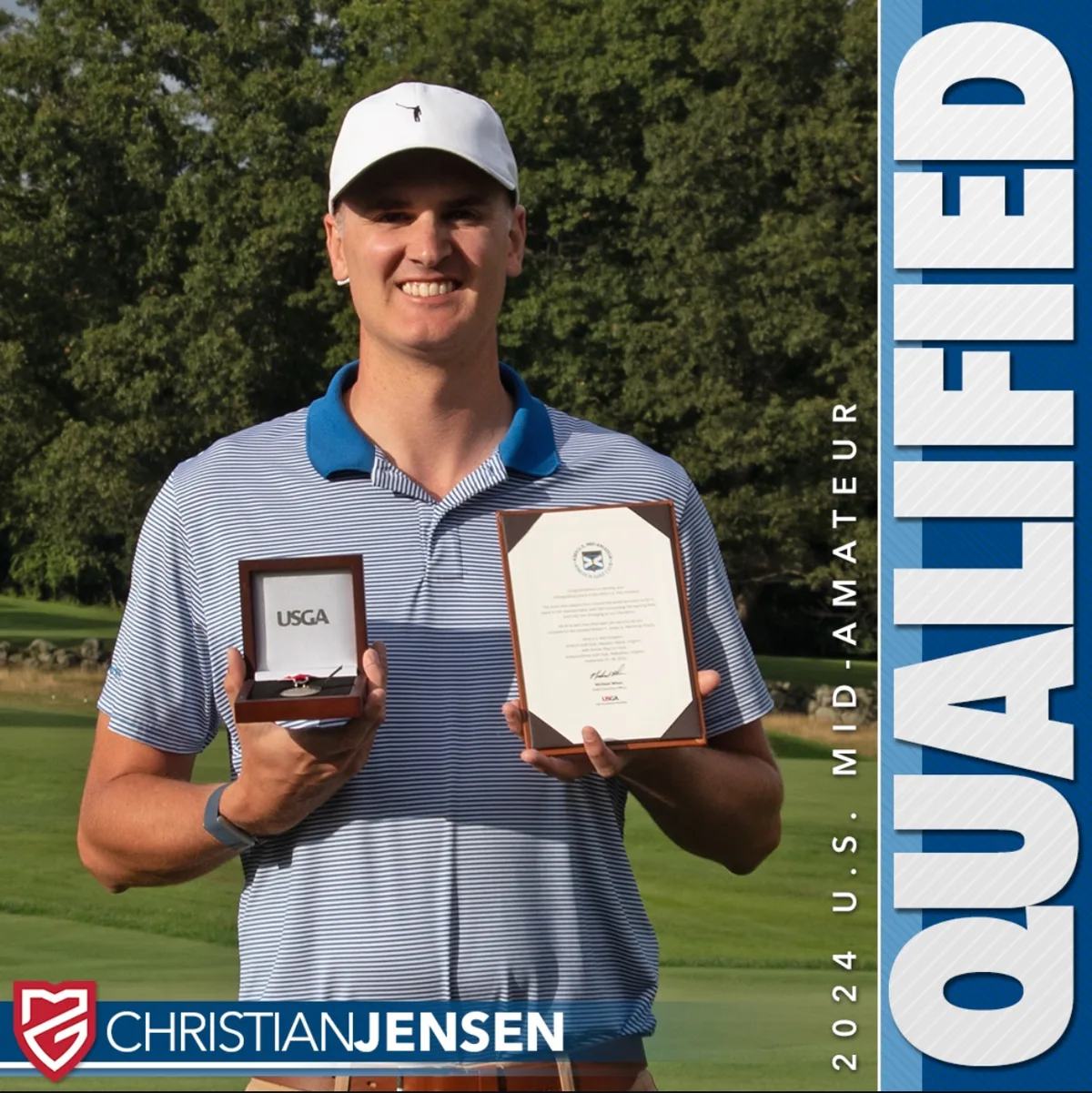
A few weeks later I carried that form into the U.S. Mid Am Qualifier at Belmont Country Club. A shaky start, two 3 putts on the par 3 third and fifth, left me 2 over and not feeling great. A lucky break on 7 seemed to settle me down, and I played the last 11 holes 4 under, capped by a nervy par on 16 and birdies on 17 and 18 for a 2 under 69. Nobody else in the field beat that number as the wind picked up throughout the day. Adding a USGA medal and a second USGA invitation in consecutive years was not something I had on my bingo board.
2025 started slow again, managing work, a toddler, and a second baby due that June. The driver, once the strength of my game, had quietly become a liability. The numbers backed that feeling up even though a couple of tournament results looked fine. Cameron was born in early June, and the long nights and tired mornings that came with him were a fair trade for the time off work that came with it. I ended up qualifying for the Mass Amateur at my home course for the first time that summer, riding a front nine 33 to sneak in at even par, and even though I had to withdraw from the playoff, it proved something to myself: I could compete with anyone in the state, not just the working class amateurs I usually play against. An unceremonious showing at the Mass Mid Am that September, followed by another rough one at Dan's member guest, made the pattern obvious. Two boys take a lot out of a schedule, and by the end of the year, only two of my rounds since Cam was born had been played outside of a tournament.
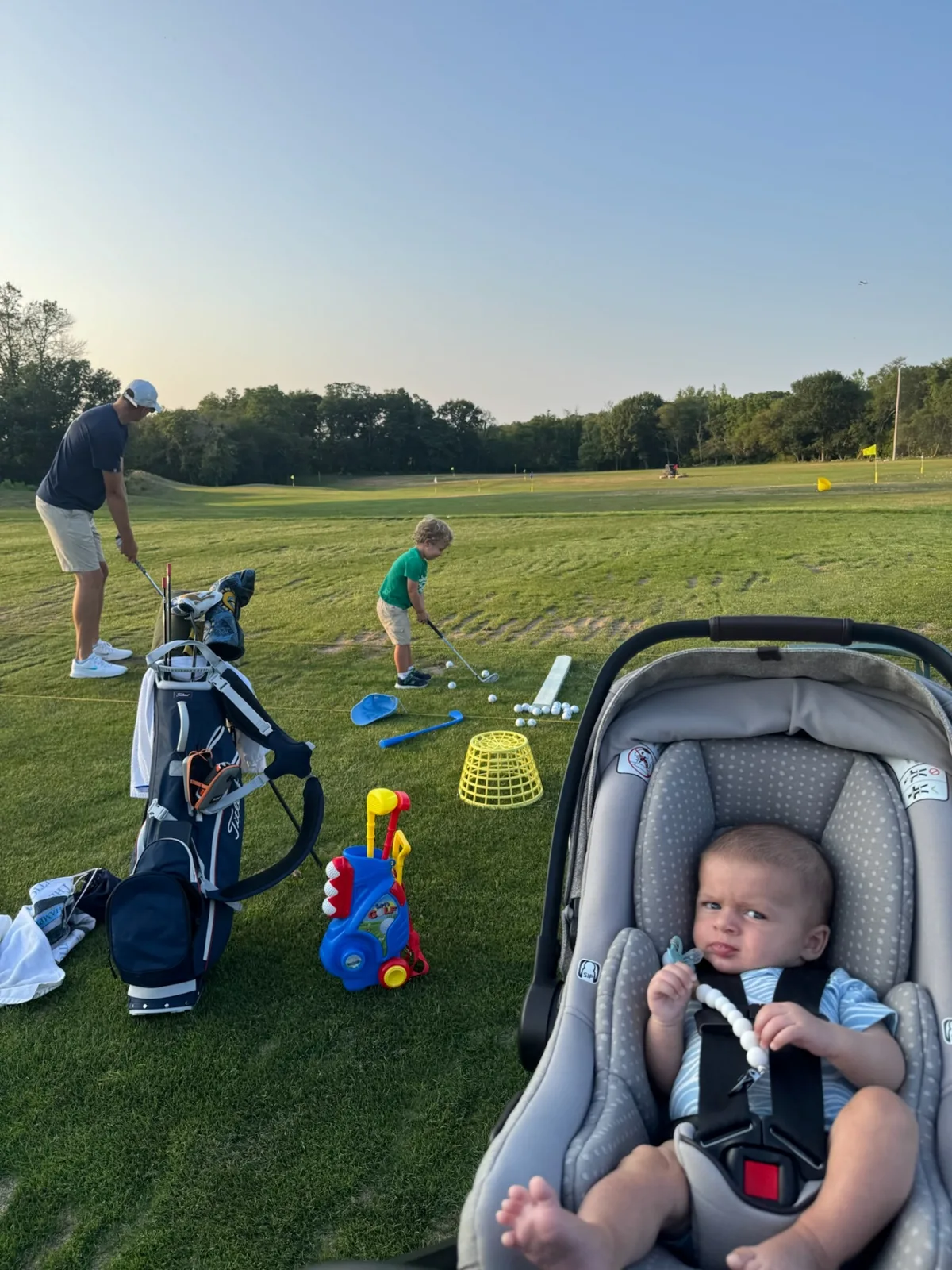
That's the version of me who walked into 2026.
The season started slow again, the Southcoast Four-Ball and the Mass Four-Ball were both not quite there. The putter, which has always been a liability, started affecting the rest of my game and mentally, forced me to over rely on ball striking. That caught up to me fast: over 7 strokes lost putting at the Mass Am qualifier at Bear Hill, another 6+ at the Norwich qualifying round concluding with a loss in the first match that Saturday. That is truthfully when the next chapter began.
In 2023, the fix was solitary. Drop Davis off at school, hit wedges alone for a month, tell no one, and let the results speak once they show up. This time the instinct is the same, but the process is different. I'm doing it in the open this time instead of in a private spreadsheet.